Saint Moses the Black

Saint Moses the Black

Popular Posts
-
Dr. Jeannie Constantinou's podcast "search the scriptures" . The Jewish Trial - 1 http://audio.ancientfaith.com/searchthescrip...
-
This is from the Energetic Procession blog: "A recent fracas between Jay Dyer and Turretinfan has yeilded some results that bring to m...
-
This is from the podcast " Glory to God " by Fr. Stephen. As seen from the webpage : " Fr. Stephen looks at the problems pres...
-
In the podcast " Sermons at St. Nicholas " Ft Thom talks about "the measure of faith and the difficulties in the Journy of li...
-
The actual text: http://septuagint-interlinear-greek-bible.com/OldTestament.pdf This is from the website " The Apostolic Bible polyglot...
-
This is Sho Baraka (an old college friend from Tuskegee University and calvinist christian rapper) and this is off his new album (Lions ...


Saint John the Theologian

Saint John the Theologian
Facebook Badge

Subscribe


 Posts
All Comments
Posts
All Comments

Monday, November 3, 2008
Septuagint - interlinear Bible (Lucian's Rescension)
 9:09 AM |
  Posted by
Jnorm |
Posted by
Jnorm |


The actual text:
http://septuagint-interlinear-greek-bible.com/OldTestament.pdf
This is from the website "The Apostolic Bible polyglot"
To hear more about the Holy Heiromartyr Lucian Of Antioch go to the link.
JNORM888
 Labels:

Saturday, November 1, 2008
Chalcedon Revisted
This is from the podcast called The Illumined Heart. This week the topic is about EO (Eastern Orthodoxy & OO(Oriental Orthodox).

Father John Erickson is interviewed about the topic.
As seen from the website:
"In today's program Kevin and his guest, St Vladimir's Theological Seminary professor, historian, and author Fr John Erickson, discuss the near 1500-year rift between the Oriental Orthodox (Armenian, Coptic, Ethiopian, Indian) and Eastern Orthodox churches. They will discuss the theology, history, politics, attempts at reunion and the current state of affairs between these two ancient eastern Christian churches."
Play Online
Direct link
JNORM888
Oldest Hebrew text found on piece of pottery

And

As seen from the website:
"By Ari Rabinovitch
JERUSALEM (Reuters) -
Archaeologists in Israel said on Thursday they had unearthed the oldest Hebrew
text ever found, while excavating a fortress city overlooking a valley where the
Bible says David slew Goliath.
The dig's uncovering of the past near the
ancient battlefield in the Valley of Elah, now home to wineries and a satellite
station, could have implications for the emotional debate over the future of
Jerusalem, some 20 km (12 miles) away.
Archaeologists from the Hebrew
University said they found five lines of text written in black ink on a shard of
pottery dug up at a five-acre (two-hectare) site called Elah Fortress, or
Khirbet Qeiyafa.
Experts have not yet been able to decipher the text
fully, but carbon dating of artifacts found at the site indicates the Hebrew
inscription was written about 3,000 years ago, predating the Dead Sea Scrolls by
1,000 years, the archaeologists said.
Several words, including "judge,"
"slave" and "king," could be identified and the experts said they hoped the text
would shed light on how alphabetic scripts developed."
To read the rest of the article, please go to the website.
JNORM888
Wednesday, October 29, 2008
Patriarch IGNATIUS IV visits America

As seen here:
"His Beatitude Patriarch IGNATIUS IV arrived in Newark, New Jersey on the evening of October 28th, 2008. He was greeted at the airport by His Eminence Metropolitan PHILIP, Bishop ANTOUN, Bishop THOMAS and area clergy. His Beatitude will stay at the Archdiocese Headquarters until Thursday October 30th when he will depart for Boston, MA, where he will preside over a celebration banquet for the University of Balamand"
To read the rest, please go to the Website
JNORM888
Study finds more U.S. Orthodox Christian converts

This is an article from the USA Today, written by Nicole Neroulias
The article says:
"A new study of Orthodox Christians in America has found a larger-than-expected number of converts, mostly from Roman Catholic and evangelical Protestant backgrounds.
The report, released by the Patriarch Athenagoras Orthodox Institute in Berkeley, Calif., surveyed 1,000 members of Greek Orthodox or Orthodox Church in America congregations, which represent about 60% of America's estimated 1.2 million Orthodox Christians.
Although Orthodox churches were historically immigrant communities, the study found that nine out of 10 parishioners are now American-born. Thousands of members had converted to the faith as adults: 29% of Greek Orthodox are converts, as are 51% of the OCA.
"I would not have expected this many," said Alexei Krindatch, the Orthodox Institute's research director. "My sense was that in Greek Orthodox, it would be around 15%, and OCA maybe one-third."
The study also found unexpectedly high numbers of converts among clergy — 56% in the OCA, 14% in the Greek Orthodox church. In both cases, the higher OCA numbers reflect that group's use of English in its worship services, he added.
These findings could mean that Orthodox churches are growing in America, assuming there aren't equal or greater numbers of Orthodox Christians leaving for other faiths; researchers won't know until they conduct a 2010 membership census. The findings, however, indicate that other Christians are increasingly seeking a more traditional worship experience, Krindatch said.
"In the case of Roman Catholics, those are mainly people who are not quite happy with the reforms of the Second Vatican Council; they are looking for the Catholic Church as it used to be in the past," he said. "In the case of evangelical Christians, those are people who have very strong personal beliefs, they know the Bible very well, they are frequent churchgoers, and eventually they want to join an established church with deep, historical roots."
To read the rest of the article, go to the USA today Website:
They didn't include the jurisdiction I'm in, which is AOA (Antiochian Orthodox Christian Archdiocese of North America) if they did the percentage would of been higher. Plus the survey was done on the west coast, the numbers could of been different if they did a national survey. But it's interesting to know what's going on in the west coast.
JNORM888
Early Byzantine Syrian Christian art
I would like to give thanks to Dr. Emma Loosley for suggesting these books to me, they will come in handy as I finish up on my rejoinder with Morey's book. But since I can't read spanish I won't be able to check out one of the books. Eventually, I will be able to check out:
1.) The Christian Art of Byzantine Syria by Father Pena (A Franciscan)

2.) The Architecture and Liturgy of the Bema in Fourth-to Sixth-Century Syrian Churches by Dr. Emma LOOSLEY (her book)
This is going to take longer than what I planned. Especially now, since I'm in the St. Stephen's Course in Orthodox Theology program. Which is seen here and here. So it's gonna be awhile, but I'm sure I can always use what I'm learning at Saint Stephen's with what I'm working on here.......so I will quote stuff from the books I have to read for the Saint Stephen's program as well. For anything that deals with the topic at hand will help. In my conclusion, I will talk about how Eastern Orthodoxy had many places(regions) of influence. Robert Morey tries to paint the picture that we came from Egypt, but that's purely false. The City of Alexandria was not the only Holy See of Orthodoxy.
He totally ignores (or just doesn't know) about the Holy See of Antioch, plus at that time, the East and West were in full communion, so you would have to include Rome in the picture as well when you talk about Ancient Orthodoxy.
For at first the Holy Sees were
1. Rome
2. Alexandria
3. Antioch
And Later two more Holy sees were added in Constantinople and Jerusalem:
1. Rome
2. Constantinople
3. Alexandria
4. Antioch
5. Jerusalem
Morey only focuses on Alexandria Egypt, but Antioch was important as well, for after all, we were first called Christians in the city of Antioch. And to ignore the influence of Antioch is to distort the whole picture. So I'm going to include the influence of Antioch in my rejoinder.
JNORM888
1.) The Christian Art of Byzantine Syria by Father Pena (A Franciscan)
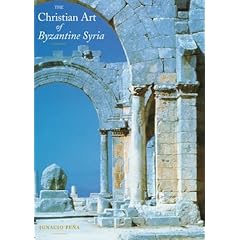
2.) The Architecture and Liturgy of the Bema in Fourth-to Sixth-Century Syrian Churches by Dr. Emma LOOSLEY (her book)
These along with Mike Aquilina's book Signs and Mysteries: Revealing Ancient Christian Symbols. Should give me what I need in talking about the issue of Icons. I'm going to be quoting from these books once I get done with it.
The plan is to start out with the signs and symbols of early christianity into the Icons of early christianity. I will also let people know about the Icons of Judaism in the synagogues as well. At least that's how I plan on making my case.
The only otherthing I have to cover in the rejoinder is the "Calvinist" Patriarch claim. Other Orthodox on the web have already posted stuff about that so I'm just gonna quote what they already said.
This is going to take longer than what I planned. Especially now, since I'm in the St. Stephen's Course in Orthodox Theology program. Which is seen here and here. So it's gonna be awhile, but I'm sure I can always use what I'm learning at Saint Stephen's with what I'm working on here.......so I will quote stuff from the books I have to read for the Saint Stephen's program as well. For anything that deals with the topic at hand will help. In my conclusion, I will talk about how Eastern Orthodoxy had many places(regions) of influence. Robert Morey tries to paint the picture that we came from Egypt, but that's purely false. The City of Alexandria was not the only Holy See of Orthodoxy.
He totally ignores (or just doesn't know) about the Holy See of Antioch, plus at that time, the East and West were in full communion, so you would have to include Rome in the picture as well when you talk about Ancient Orthodoxy.
For at first the Holy Sees were
1. Rome
2. Alexandria
3. Antioch
And Later two more Holy sees were added in Constantinople and Jerusalem:
1. Rome
2. Constantinople
3. Alexandria
4. Antioch
5. Jerusalem
Morey only focuses on Alexandria Egypt, but Antioch was important as well, for after all, we were first called Christians in the city of Antioch. And to ignore the influence of Antioch is to distort the whole picture. So I'm going to include the influence of Antioch in my rejoinder.
JNORM888
Saturday, October 25, 2008
Jewish Iconography in Ancient Synagogues
In reading "Signs and Mysteries" by Mike Aquilina & Lea Marie Ravotti, I came across a statement that said:
"The Early Christians kept, more or less, within these limits. Yet, even with these constraints, they found an abundance of images at hand. Their first resource was the Bible, with its rich history and metaphor. The biblical images had for generations been stereotyped in the iconography of the synagogues of the Jews. Though later Judaism came to reject most religious artwork, the synagogues of late antiquity were lavishly decorated." page 15 [1]
They didn't have any pictures of this claim, but I didn't doubt it because I once saw something on TV in where they found evidence of something similar. I also heard a Conservative Jewish Rabbi mention the samething about some synagogues that still have icons in them. But I never really saw any pictures of what he was talking about. I heard the conservative Jewish Rabbi say it on this podcast. Play Online (It's about 40 minutes long and it was said in passing, when asked a question about it)
The pictures shown on this blog came from this Website: I agree with the general drift/ethos of what was said, but I don't agree with every statement said on that site for the issue was a bit more complex than that. There were christians in the church that rejected it, and it took a while for the Church to take a stand on the issue, but I 100%ly agree that images in some form were always present. We can see this with the Fish, the cross, the Shepard and the lamb, along with a host of others......... With that said, here are the Jewish pics.

Judean Synagogue in Dura Europos. According to the website it dates back to about 235 A.D.

This is a close up picture of one of the icons dipicted above.
Now, what I would like to know is when did the Jews start to change their mind about iconography in their Synagogues? Well wait, I heard that even some synagogues today have icons. But I would still like to know when they changed their mind. .......in general.
You can also find this icon at this Site.
JNORM888
[1] page 15, from the book "Signs & Mysteries: Revealing Ancient Christian Symbols" by Mike Aquilina, illustrations by Lea Marie Ravotti, Copyright 2008 by Our Sunday Visitor publishing.
"The Early Christians kept, more or less, within these limits. Yet, even with these constraints, they found an abundance of images at hand. Their first resource was the Bible, with its rich history and metaphor. The biblical images had for generations been stereotyped in the iconography of the synagogues of the Jews. Though later Judaism came to reject most religious artwork, the synagogues of late antiquity were lavishly decorated." page 15 [1]
They didn't have any pictures of this claim, but I didn't doubt it because I once saw something on TV in where they found evidence of something similar. I also heard a Conservative Jewish Rabbi mention the samething about some synagogues that still have icons in them. But I never really saw any pictures of what he was talking about. I heard the conservative Jewish Rabbi say it on this podcast. Play Online (It's about 40 minutes long and it was said in passing, when asked a question about it)
The pictures shown on this blog came from this Website: I agree with the general drift/ethos of what was said, but I don't agree with every statement said on that site for the issue was a bit more complex than that. There were christians in the church that rejected it, and it took a while for the Church to take a stand on the issue, but I 100%ly agree that images in some form were always present. We can see this with the Fish, the cross, the Shepard and the lamb, along with a host of others......... With that said, here are the Jewish pics.
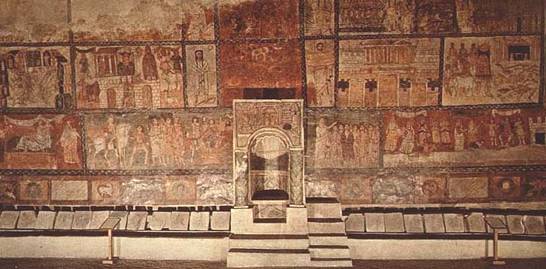
Judean Synagogue in Dura Europos. According to the website it dates back to about 235 A.D.

This is a close up picture of one of the icons dipicted above.
Now, what I would like to know is when did the Jews start to change their mind about iconography in their Synagogues? Well wait, I heard that even some synagogues today have icons. But I would still like to know when they changed their mind. .......in general.
You can also find this icon at this Site.
JNORM888
[1] page 15, from the book "Signs & Mysteries: Revealing Ancient Christian Symbols" by Mike Aquilina, illustrations by Lea Marie Ravotti, Copyright 2008 by Our Sunday Visitor publishing.
The School of Antioch

From the podcast Search the Scriptures. Dr. Jeannie Constantinou talks about the school of Antioch and Saint John Chrysostom.
Part 1
Play Online
Direct Play
Part 1
Play Online
Direct Play
The School of Antioch Part 2
Saturday, October 18, 2008
The Cappadocian Fathers & the rise of the school of Antioch
This is Lesson 20 from the podcast, Search the Scriptures. Last week Dr. Jeannie Constantinou finished her discussion about the school of Alexandria. This week her focus is on the Cappadocian Fathers.
As seen from the Website:
"Today, Jeannie looks at 2 of the Cappadocian Fathers - Basil the Great and Gregory of Nyssa."
Play Online
Direct Link
JNORM888
As seen from the Website:
"Today, Jeannie looks at 2 of the Cappadocian Fathers - Basil the Great and Gregory of Nyssa."
Play Online
Direct Link
JNORM888
Wednesday, October 15, 2008
The Chrysostom Bible Commentary Series

"The present Bible Commentary Series is not so much in honor
of John Chrysostom as it is to continue and promote his legacy as an interpreter
of the biblical texts for preaching and teaching God’s congregation, in order to
prod its members to proceed on the way they started when they accepted God’s
calling. Chrysostom’s virtual uniqueness is that he did not subscribe to any
hermeneutic or methodology, since this would amount to introducing an
extra-textual authority over the biblical texts. For him, scripture is its own
interpreter. Listening to the texts time and again allowed him to realize that
“call” and “read (aloud)” are not interconnected realities; rather, they are one
reality since they both are renditions of the same Hebrew verb qara’. Given that
words read aloud are words of instruction for one “to do them,” the only valid
reaction would be to hear, listen, obey, and abide by these words. All these
connotations are subsumed in the same Hebrew verb šama‘. On the other hand,
these scriptural “words of life” are presented as readily understandable
utterances of a father to his children (Isaiah 1:2-3). The recipients are never
asked to engage in an intellectual debate with their divine instructor, or even
among themselves, to fathom what he is saying. The Apostle to the Gentiles
followed in the footsteps of the Prophets to Israel by handing down to them the
Gospel, that is, the Law of God’s Spirit through his Christ (Romans 8:2;
Galatians 6:2) as fatherly instruction (1 Corinthians 4:15). He in turn wrote
readily understandable letters to be read aloud. It is in these same footsteps
that Chrysostom followed, having learned from both the Prophets and Paul that
the same “words of life” carry also the sentence of death at the hand of the
scriptural God, Judge of all (Deuteronomy 28; Joshua 8:32-35; Psalm 82; Matthew
3:4-12; Romans 2:12-16; 1 Corinthians 10:1-11; Revelation 20:11-15).
While
theological debates and hermeneutical theories come and go after having fed
their proponents and their fans with passing human glory, the Golden Mouth’s
expository homilies, through the centuries, fed and still feed myriads of
believers in so many traditions and countries. Virtually banned from dogmatic
treatises, he survives in the hearts of “those who have ears to hear.” His
success is due to his commitment to exegesis rather than to futile hermeneutics.
The latter behaves as someone who dictates on a living organism what it is
supposed to be, whereas exegesis submits to that organism and endeavors to
decipher it through trial and error."
You can read the rest at the Website:
According to the webpage, Some of the volumes should be ready by 2009 & 2010.
JNORM888
Subscribe to:
Posts (Atom)
Blogs: Eastern Orthodox
-
-
Why Not Use Ancient Rites?6 years ago
-
-
When Everyone Is Watching3 months ago
-
-
-
It’s Time to Say Goodbye4 years ago
-
About the Mystagogy Resource Center3 months ago
-
-
Orthodox Life15 years ago
-
-
Resurrection Sunday 20265 months ago
-
-
The End of This Work9 months ago
-
-
The end of Pious Fabrications12 years ago
-
-
Bending Toward Bethlehem2 years ago


Blogs: Oriental Orthodox
-
-
Restoration of The Son10 years ago


Blogs: Roman Catholic
-
-
-
-
-
-
A Brief Update12 years ago
-
-
-
My Sister's New Blog15 years ago
-


Blogs: Anglo-Catholic/ACNA
-
A SOURCE OF MORAL CONFUSION4 weeks ago
-
Hello world!2 years ago
-
-
-


Blogs: Lutheran Protestant
-
Backup1 month ago
-
-
-


Blogs: Mostly Arminian Protestant
-
Book Review: Grace for All10 years ago
-
-
Denah Rumah Type 36 Luas Tanah 728 years ago
-
Christian Rappers and Collaborations15 years ago
-
-
-
-
-
-
-
-
-
-
NOT Independence Sunday17 years ago
-


Blogs: Reformed Protestant
-
-
Do Not Disavow2 years ago
-
-
This Blog Has Moved!!!12 years ago
-
-
Is Peter the Rock of the Church?16 years ago
-
-


